
Candle Power without the flame.
No Electricity Required
Nightlight, the
Electricity access in Sub-Saharan Africa is only 17%, the lowest worldwide. About 70% of South African’s are connected to grid electricity. Of the 30% remaining (about 2.5 million households) 51% lie in deep rural areas. Exacerbating this, residents in rural non-electrified areas spend more money on fuel than people living in electrified homes. People in non-electrified areas spend three to four times more money on energy than people in electrified areas.
“Renewable energy provides an excellent opportunity to provide modern energy services to those lacking it, even in
Figures from the International Energy Agency show that at least 20% of the world’s population
Interesting facts:
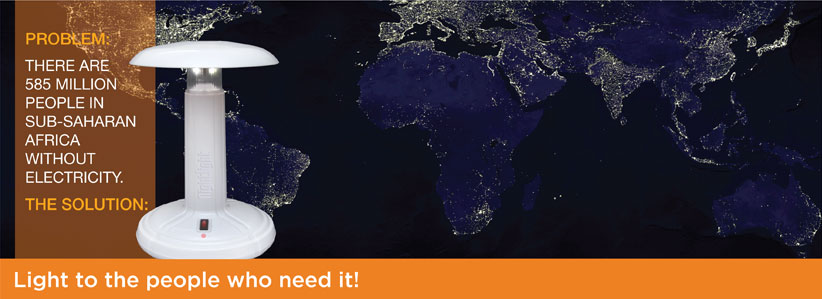
- There are 585 million people in Sub-Saharan Africa without electricity.
Fuel powered light consumes 77 billion litres of fuel worldwide.- Kerosene wick lamps can cause fatal respiratory problems. Four hours of burning a kerosene lamp
emits 100kg of CO₂ per year. - People without electricity pay hundreds of times more per lumen.
- Lack of light stimulates poverty.
- Lack of light results in sub-standard education.
- In order to compete with the
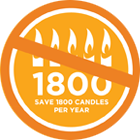
Nightlight a family would have to burn five (5) candles at one time per day. 1 825 candles per year = over 5 475 candles in three years.
Our Mission is To :
Give light to those who need it, lighting their homes every night, and making it easier for children to do their school work in relevant comfort and without endangering their eyesight – or themselves.
Seven Key Factors
Nightlight – Solar Candle: Candle Power without the flame
- Is solar chargeable, even in poor weather conditions.
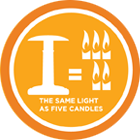
- Offers light equivalent to that of five candles for up to seven hours.
- Nightlight uses Light Emitting Diodes (LEDs) which have a 12 000 – 15 000 hour life span.
Battery lasts up to four (4) years.- Offers a safe alternative to conventional lighting in rural areas and informal settlements.
- Is economically viable.
- Is environmentally friendly (no air pollution).
Influential Facts
- More often than not, we hear or read news reports of shack fires which, unfortunately, sometimes result in fatalities, serious injury and, sadly, a large number of homeless families. In many instances, these fires were accidentally started by residents using open candles, or similar means, for their lighting requirements.
- Extensive take-up of Nightlight will minimise these occurrences!
- School children without proper lighting are affected negatively. Children doing homework by
candle light run the risk of damaging their vision in the long-term. The lack of lighting and circumstances also affects their overall productivity. - Nightlight ensures sufficient light for productive learning in a safe manner.
- The annual comparable candle usage = 1 825 candles per year.
Nightlight’s lithium-ion battery should last for four years with medium or moderate use and three years with heavy use, and solar charging is free. - Nightlight will bring
much needed lighting relief to millions of South Africans, regardless of their habitat and standard of living. - The Nightlight Solar Candle was designed and developed in South Africa, so as to ensure reliability in harsh African conditions.
About Nightlight
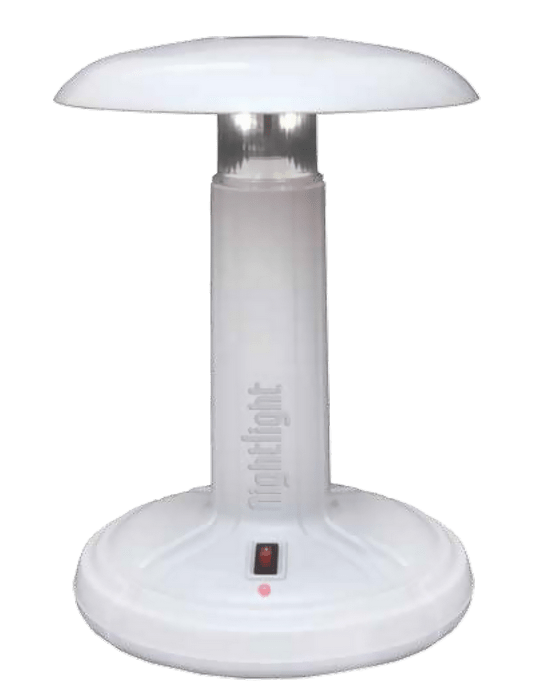
The product is referred to as The Solar Candle as it was specifically designed to replace the standard paraffin-wax candle that is currently the prime source of light for millions of households. The Solar Candle is shaped like a candle in a saucer. It is the same height as a standard candle but provides five times the light of a single candle flame.
As a primary source of lighting in poor communities, The Solar Candle offers a number of significant benefits – among them, a vastly improved quality of life.
Completely Safe
Open flames are by far the biggest cause of shack fires (which are a major problem in informal settlements), and the main sources of flames are paraffin stoves, paraffin lamps and candles. The Solar Candle poses no fire hazard and completely eliminates the need for paraffin lamps and candles. Helping the community in any informal settlement to obtain Solar Candles will substantially reduce the likelihood of fires in that area.
Very Economical
The cost of the unit is extremely economical as there is no new or on-going cost for fuel (power). The battery battery should last for four years with medium or moderate use and three years with heavy use. In order to compete with the Nightlight a family would have to burn five (5) candles at one time per day.
1 825 candles per year = over 5 475 candles in three years, a Nightlight will cost a fraction of the cost of the candles. The saving is significant, particularly in poor communities, and will leave extra money for other essentials. In addition, when one takes the safety factors into account the actual value of the product, when compared to older and more widely used methods of light in the informal sector, is immeasurable.
Clean Burning Energy
A typical paraffin-wax candle produces 10-16 grams of CO₂ for every hour it is burns. This means that, if one candle is burned every day, about 25kg of CO₂ is emitted into the atmosphere every year. If a single kerosene lamp burns for four hours a day, 100kg of CO₂ is emitted annually.
During its lifespan, The Solar Candle emits no CO₂ at all. So, for every 1 000 candles replaced by Solar Candles, 25 tons of CO₂ is prevented from entering our atmosphere annually and for one kerosene lamp, 100kg of CO₂. If one considers that over 500 million candles are used in South Africa every year, the potential for CO₂ reduction and earning Carbon Credits for the country is in excess of 12.5 million tons per annum.
High Quality
Only the best available components are used for The Solar Candle. The battery is lithium-ion, similar to those used in cell phones, with a life span of four years with medium or moderate use and three years with heavy use. It can be replaced. The solar panel has a 15 year life span and the Light Emitting Diodes (LEDs) will last for approximately 12 000 – 15 000 hours. The circuit board assembly is fully automatic, eliminating human error.
Nightlight Facts And Features
- Light output – five candle-power.
- Much cheaper than candles or paraffin lamps.
- Product life span – should last for four years with medium or moderate use and three years with heavy use. After that, only the battery needs to be replaced.
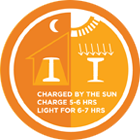
- Charge time – it takes up to six hours to charge in sunlight; and up to nine hours if overcast.
- If fully charged it provides up to seven hours of light.
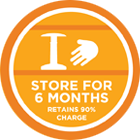
- It holds its charge well. Once fully charged and then stored, it will still be 90% charged after six months.
- Clean (no CO₂ emissions) and completely safe (no fire hazard).
- Water-resistant – it is NOT water-proof so care should be taken.